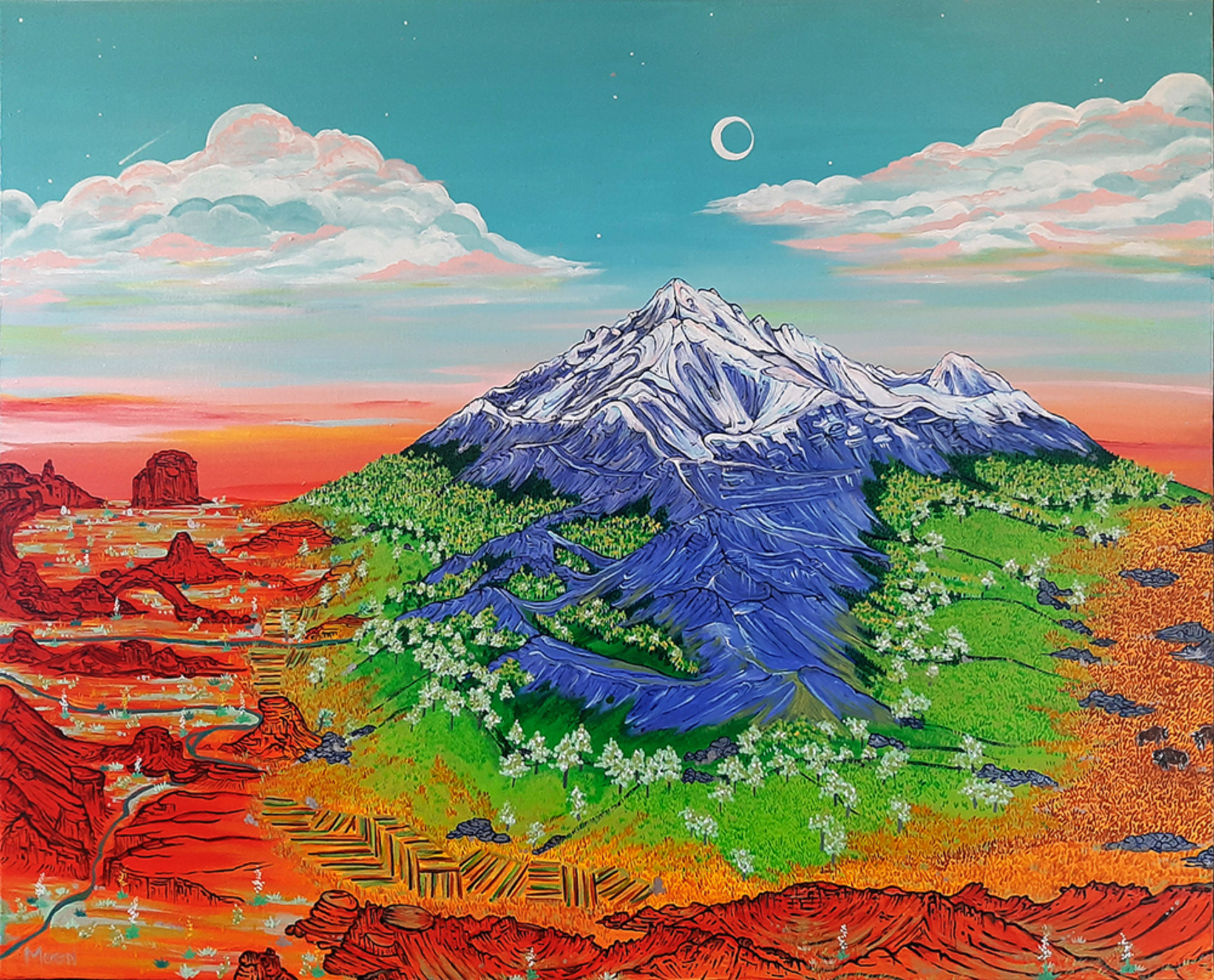

I believe that I have always been compassionate towards the inanimate. I always remember feeling heartbroken over neglected, lost, or abandoned items–perhaps most so as a young child. During my childhood, I loved naming everything, and felt called to make pets out of rocks quite often (I remember in particular one large rock on my school’s playground that I named Jeffrey who I would like to visit and check in on during recess). I have another memory of a soccer practice when I was around nine or so, during which I was feeling particularly attached to one of our practice balls, naming it “Steven”. One of the reasons this memory has stayed with me is I remember another girl at practice calling me “weird” for doing so, and then my friend Coral promptly shouting at that girl, “Don’t you say that, she’s my friend!” (forever imprinting on me the deep knowledge that Coral is a loyal friend–they are indeed still one of my best friends to this day).
I can understand that other girl’s instinct to call me “weird”. Something that is quite normal as a young child is play-acting with toys, giving them personalities and names, and thus giving them life. This call towards loving and giving life to the inanimate is, I think, something inherent in many children that can get weathered away through the necessity of building certain callouses as one ages. In our modern world, it is certainly expected that at some point we learn to differentiate that which lives and that which doesn’t, and to place a vastly larger sense of importance on one versus the other. At around nine years old, I was already expected to start maturing past the impulse to give life and names to that which is not alive. Society expects it of us. That soccer teammate certainly was expected to stop loving that which could not love her back, and those expectations that were placed on her were then extended to me.
In many ways, as I got older, I did learn to stop being so over-the-top and flamboyant with my love for the inanimate. The societal expectations to do so were a powerful moving force; societal expectations (and thus peer expectations) are arguably the most powerful force for an adolescent. One does not want to do too much to stand out, or be called “weird” by one’s peers as a teenager, even if there are loyal friends in the wings to stick up for you. And so I learned to quiet those impulses, and only show them around those whom I was most intimate with. That lapse in overt love for the world seemed to me to just be a component of growing up and being an adult–and like all teenagers, I was ravenous to be seen as an adult.
To no small extent, this societal agreement of valuing life over the non-living does not stop at the inanimate. Bacteria, plants, and fungi–although very alive–are often considered “things” to most people, and not living beings. Even many animals are considered as “things”, especially if they’re used in food production, we deem them to be gross or unsettling in some way, or maybe even if they’re causing a slight inconvenience.
However, I do not think that this is how the world always was. There was not always the expectation that “maturing” meant deadening yourself to the world. In fact, I’d go so far as to say this separation of self vs world is a product of the current, wide-spread capitalistic mentality. It could perhaps also be seen as a product of a society based largely on the values of a punitive monotheistic religion; or, conversely, as an unfortunate byproduct of the scientific revolution, and of living in a society primarily operating on the principles of scientific thought.
Many indigenous cultures from all over the world have historically been based on the foundation of animism (and many indigenous cultures still extant today do as well, to a large extent). Animism is the belief and understanding that the world is alive, and that everything has a spirit. The rocks, trees, rivers, flowers, storms, fields, bugs, animals, clouds, everything–each has their own spirit, perhaps their own name, and their own importance in the world. To believe in animism is to live in a world where spirits abound, and one’s own spirit is simply a single thread that is woven into the tapestry of life. The world and everything in it is understood to have importance–and most keenly of all, humans are not above it all, but meshed with it.
There are other parts of the world where certain of these spirits were given elevated status, and deemed to be gods. This occurrence, in some places, gave rise to polytheism (or paganism). Instead of the storms comprising a single instrument to the orchestral melody of life, they became the conductors. Storm gods are often the head of pantheons, or at least one of the primary forces. Some other powerful forces that were given precedent again and again in these types of religions and societies were the sun god, the earth goddess, the sky god, and the moon goddess. These gods and goddesses often were representatives of larger-than-life forces that peoples could tell were instrumental for life, were central to humanity’s place in the universe, and well beyond any sort of attempt at control. Undoubtedly, they were worthy of worship and attention. In these types of religions there are still often animistic undertones, and still very much an understanding that humans are a part of the whims of the natural world, and not rulers over it.
In other places of the world there then arose a hierarchy of gods to such an extent that one god came to rule over all others. Eventually, all of the other gods became extinct–or entirely non-existent. There is evidence that I find compelling that Yahweh, the early name of God in the Old Testament (or Torah) is an early storm god that was worshipped by a polytheistic people ancestral to the Hebrews. Throughout time, Yahweh was elevated again and again up the pantheon until, eventually, it felt the most pertinent and true to these ancient Hebrews that Yahweh was the one and only God (which is perhaps why he insists so much upon this in the Old Testament). Thus Abrahamic Monotheism was born (of which, of course, Judaism, Christianity, and Islam are all members). It is in the writings from these traditions where the ideals of human supremacy over other earthly things is clearly laid out.
However, there is still room within monotheistic traditions for the inherent belief in the value of all things to seep its way through. An example of this is monism. Monism is the belief that all things are divine–that everything radiates from the divine source (God), and everything is a part of said source. All things are unified and one in this divinity. Sikhism and Bahá’ísm are two examples of monotheistic religions that base their faith in God and in the world through a monistic view.
I would also argue that mystics of any religion are drawn towards monism. I even saw this in Zen Buddhism (which I would argue is a rather mystical Buddhist practice). I feel this is even a tenet of mysticism–that through directly experiencing the divine in a mystical experience, one comes to inherently know and experience it in all things. Once a mystic comes to know the vastness of God, or the Universe, or the Ultimate Truth, or the Great Unknown (or whatever name for such ineffability fits best), it is almost impossible to untangle any singular thing from such divinity. At least, this is definitely true in the philosophy of the mystics; embodying that belief is often much more difficult, and requires constant practice.
Now animism, which I do think is the more intrinsic impulse found in children to name and give spirit, life, and love to the inanimate (or plants, bugs, animals, etc), is different from monism. In animism, everything has its own spirit; in monism, everything is of the same spirit. However, in both, there is this tug to recognize the sanctity of the world we inhabit. There is a recognition that everything has value, everything is worthwhile, everything has absolute potential to be loved.
Despite the vague effort I put in as a teen to quell my more animistic tendencies, it was not an impulse that was lost in me. I still deeply feel a calling to love the things around me, to recognize their spirits and to know their names. In fact, I believe that such animistic tendencies are something that most people cannot squash down entirely or effectively (unconsciously or not). I feel like this manifests most keenly in “things” that people care for or spend time with for a long time. Most modern American adults will have some sort of emotional response to needing to sell or junk a car that they’ve spent countless hours in and spent countless dollars on tending to; most people have a hard time moving from a home that they spent years cultivating; people become attached to favorite tees, hoodies, shoes, childhood stuffies, armchairs, toolboxes…the list can go on. This is nothing to say of the living (non-human) beings that people grow attached to through their care of them, such as gardens, houseplants, trees, or pets. I believe there is a yearning, deeply inherent in humans, to love and care for the world.
Why do people fight this impulse to love the world, to love that which may not be able to say or show “I love you” back? I think that this can be largely traced to two sources: First, a very real psychological and physical need to not constantly be grieving. To love inherently means that, at some point, there will be mourning. Today, the world is so large and interconnected, and we have access to the pain of so many more beings now than ever before in human history. It can perhaps be psychologically and holistically easier to deal with the death of a single beloved tree than to deal with the reality of widespread deforestation and destruction of ecosystems. It can be easier to fully tend to the heartbreak over the destruction of a beloved swimming hole spot due to a mudslide than it is to deal with large-scale catastrophic events due to climate change. It can be easier to mourn and honor the death of the animal you just had to kill to feed your family than to process the brutal reality of factory farming.
Second, capitalistic forces so dominant in our world today desperately want us to see everything in the world as an “it”, and thus something that is easily disposable or exploitable. One does not have to worry about their impact or place in the world if everything that we interact with are only “things”. One does not have to dwell on the source of their clothes, their electronics, their furniture, or their food, if all of these are just “things” that can be easily replaced by more “things”. Capitalism is dependent on this mindset. There must always be a need for more, and for that to be the case, there must be a great diminishing of worth with what you already have (or who you already are).
The first reason I just laid out–that diminishing the importance of the world around you is at times necessary for one’s mental and physical well-being in today’s world–can be applied like a medicine. I would argue that the second reason–the corruption of the human psyche and spirit by capitalistic machinations–is always a poison (often quite literally). There is no denying (by any rational person) that humanity’s current rapacious attitude towards our world is not only killing the beings–both animate and inanimate–in virtually every ecosystem in the world, but is also killing ourselves. This is, of course, because the two cannot be disentangled. Despite what some people, doctrines, or pundits might say, people cannot exist separately from the world we inhabit.
As the Buddhists (or ecologists) would say, everything is interconnected.
I am so fortunate that I lived as a Zen monastic at the point in my life when I did. I moved to Green Gulch Farm Zen Center when I was 22 years old. I was very much so a young adult, primed and eager to receive insight and wisdom to aid me as I transitioned into a more mature life. I was thirsty for and enthralled with Zen life immediately. Despite identifying adamantly as an atheist when I first became a monk, there were many facets of the Zen doctrine and lifestyle that immediately appealed to the deepest corners of my being. One of the most notable of these is that Zen is a religion that (at least in the form we practiced at the San Francisco Zen Center temples) comes from Japan. As such, there are a plethora of Japanese influences on the practices and doctrines of living as a Zen monk. The Japanese culturally and traditionally have placed high value on treating everything with respect. There is a ritualism to the traditional Japanese way of life that melded well with Zen philosophy (one is shaped by the other, after all) and monastic life. This element of Zen life is one that I deeply celebrated and honored.
There was a ritual of care around everything in the monastery and in the garden at Green Gulch (and subsequently at Tassajara and City Center, the other two temples I lived in later). There was an expected way to hold a bowl and a utensil, to hold a tea cup, to wash the dishes, to chop the vegetables, to arrange one’s shoes as you removed them to enter a building, to fluff your cushion in the zendo, to clean and put away one’s gardening or farming tools, and to light and place incense. Everything was handled with care and respect.
All of these rituals and expectations are a component of Zen monastic life for a few reasons. First, needing to pay attention to how you do everything, even the most mundane of activities, invites an awareness and mindfulness throughout your day (and thus throughout your life). You end up engaging more with your moments, because there are these near constant expectations for how you should be conducting yourself that must be upheld. Second, attending to the moments in your life, and all of the components of it therein, inspires a greater presence with those things. Your mind can really tend to what it is that you are interacting with in the moment. You can fully drop-in and experience what the weight of the bowl feels like in your hands, what the texture of your food is as your chewing, what the squish of the pillow feels like as you fluff it, or what the sound of the carrot is as your carefully chop it. This sort of awareness also inevitably leads to you treating each of these items with more respect. You end up finding real joy in keeping everything clean, tended to, and loved.
It was at Green Gulch that I began to learn the language of plants. To attend to those which cannot speak, one needs to treat them with care, concentration, curiosity, and patience. It is a great lesson that I learned while tending to all of the many flowers, fruit trees, and shrubs in Green Gulch’s garden. I would need to ask them: Little plant, how do I know you’re thirsty, hungry, sick? How do I know how to help you? Knowledge gleaned from the millennia of gardeners of the past can help, as can attuning to the soil and the plant themselves. It requires slowing down and listening with more than your ears–you must also listen to your own intuition and unconscious, and the richness of information stored therein (the wisdom of the unconscious can be heard and acknowledged by the conscious mind if it is given space to do so–for me it took great practice, but is something now that I have complete faith in). The Green Gulch garden was one of the greatest teachers I ever had.
Carefully tending to plants is not so dissimilar from tending to traumatized and hurt sentient beings, really. Often in such states of duress, even sentient beings can have a hard time communicating what they need (which can, unfortunately, even include yourself). I first learned this lesson most keenly while volunteering at a cat shelter in Fort Collins, Colorado, where I was living unemployed and uninspired by life right before my move to Green Gulch. As anyone who has regularly interacted with cats knows, they are rather particular in how they receive love and care, rightly so. They are excellent teachers in consent and careful attention. There was one cat in particular who was a true teacher in these lessons. Her name was Isabelle, and she was a large orange tabby who had had a particularly traumatizing life. She did NOT tolerate contact that was not 100% on her terms. As a volunteer, part of my role was to socialize the cats, to make them more appealing to adopters and ready to live in a home with humans once more. Isabelle needed a lot of socializing, although she seemingly had the opposite of interest in doing so. If there was any attempt at affection (sometimes even just verbally), she would hiss and scratch at you. I eventually found that if I left her door open, and just went and quietly sat on the bench in the room, she would come and climb into my lap. I could not pet her once she was there of course, but she would settle right in and start purring. She craved the connection and contact, and yet was so afraid for her safety, that she had to have it be entirely on her terms. I’ve also met people like this, and when such a being chooses to let you love them (even passively, even just for a little bit), it feels like a wondrous reward.
It was also while at Green Gulch that I first came to read Joseph Campbell, who through his expertise in myths across time and cultures is able to synthesize and share some beautiful, profound truths seemingly core to the human experience. He is someone who became a mystic through academia, and the truths he offers from his studies have a way of resonating to people of both the academic and the mystical persuasion alike.
It is while reading Campbell that I encountered the essence of what this post is about: the importance of treating everything as a “thou” instead of an “it”. This particular lesson comes from his interview/book “The Power of Myth”. In this interview with Bill Moyer (that was ultimately also turned into a book), he succinctly points out that indigenous peoples often interacted with the world in a way that treated everything with respect. The world, and the beings they interacted with (both animate and inanimate) were addressed by these people not only as an equal (as a “you”), but as a “thou”–something elevated, spiritual, holy, divine. To designate the world that surrounds us instead to an “it” not only relinquishes that entity of their inherent divinity, but denigrates them to a status lower than yourself. Here is some of this idea in his own words:
The Indians addressed life as a “thou,” I mean, trees and stones, everything else. You can address anything as a “thou”, and you can feel the change in your psychology as you do it. The ego that sees a “thou” is not the same ego that sees an “it”. Your whole psychology changes when you address things as an”it”. And when you go to war with a people, the problem of the newspapers is to turn those people into its, so that they’re not “thous“.
That last sentiment rings just as true today as it did then. How often are not only the non-human designated as “its”, but people are as well. To do so not only robs them of their humanity, but of their inherent divinity. Deeming anything–but perhaps most keenly, people–as an “it”, removes them of their spirit, loves, fears, memories, hopes, quirks, connections, flaws, perfections, and imperfections. Not only does it rob the denigrated victim of divinity, but I’d argue it robs the perpetrator of their own divinity as well. Something vital is lost in oneself when one removes the divinity of someone–anyone–else.
While at Tassajara I read a couple of biographies of St. Francis, the Catholic saint I’ve always resonated the most with. While living as a monk I encountered some of his poetry in an anthology of mystical poets, and this inspired me to learn more about his story and life. St. Francis was undoubtedly a mystic. He experienced God very directly, and this experience opened him up to the inherent divinity in all things (rather monistic of him, really). He fell in love with the whole world because he saw God, and His divine love, in everything. It’s what inspired him to commit himself to “Lady Poverty” as his wife, live a very humble life wearing rags, tend to the lepers that no one else would tend to, and recite sermons to the birds. He indeed saw everything in the world as the holiest “Thou”, as he saw everything in the world, fully and truly, as God (you know–the holiest “Thou”).
Here is a short poem from St. Francis that I believe encapsulates this spirit. It is from the aforementioned anthology, one of my favorites: Love Poems from God, edited by Daniel Ladinsky.
In All Things
It was easy to love God in all that
was beautiful.
The lessons of deeper knowledge, though, instructed me
to embrace God in all
things.
My life, too, has been made more rich by allowing myself with childlike wonder and simplicity to love the world, to see and embrace the divine in all things. It adds worth to a life to treat that which surrounds you with worth. To do so enables a satiety on what can be “enough”. It allows connection to your environment, your surroundings, your moments. It opens your heart to the world, and allows more beauty in. It softens your heart and makes you kinder. Perhaps this is why the “deeper knowledge”, as St. Francis put it, is “to embrace God in all things”–because in doing so, one connects more easily to one’s life, to one’s heart, to one’s purpose. It inspires action to care for your community, your environment, your home, your belongings, and all beings as something precious and worthwhile. It desterilizes your relationship with the world, and makes it richer and fuller, more vibrant and luminous.
Every morning in the garden at Green Gulch we read a poem by the late, great, wonderful poet Mary Oliver (a personal favorite of mine) before we started our day of work. Mary Oliver, like St. Francis, lived her life as though she were in love with the world, and everything in it. Reading one of her poems was a wonderful foundation for us to start our day on–setting an internal precedent to tend to our garden that we had the privilege of tending to with wonder and devotion. She has many, many, wonderful poems in which she expresses her love for her life and the world (especially the natural world) in deep and earnest prose. While writing this post, one of her poems popped into my mind that seemed especially pertinent. This is from “New and Selected Poems, Vol. 2”
Some Things, Say the Wise Ones
Some things, say the wise ones who know everything,
are not living. I say,
you live your life your way and leave me alone.
I have talked with the faint clouds in the sky when they
are afraid of being left behind; I have said, Hurry, Hurry!
and they have said: thank you, we are hurrying.
About cows, and starfish, and roses, there is no
argument. They die, after all.
But water is a question, so many living things in it,
but what is it, itself, living or not? Oh, gleaming
generosity, how can they write you out?
As I think this I am sitting on the sand beside
the harbor. I am holding in my hand
small pieces of granite, pyrite, schist.
Each one, just now, so thoroughly asleep.
So go ahead, and indulge in your childlike desire to love. The mystics all give you permission to do so. If anyone says otherwise, just tell them to “live your life your way and leave me alone”. Or, perhaps in defense of all you love, you can tell them “she’s my friend!” as Coral did for me all those years ago. The world is calling for compassion and love. If we all actually tend to it, every part of it (even your cereal bowl, the line of ants across the sidewalk, that lone dandelion growing through the pavement, your hole-y socks), we might begin to actually return to our humanity and heal the world that is calling out for us to love it.